Research Topics
Solid-State Quantum Emitters
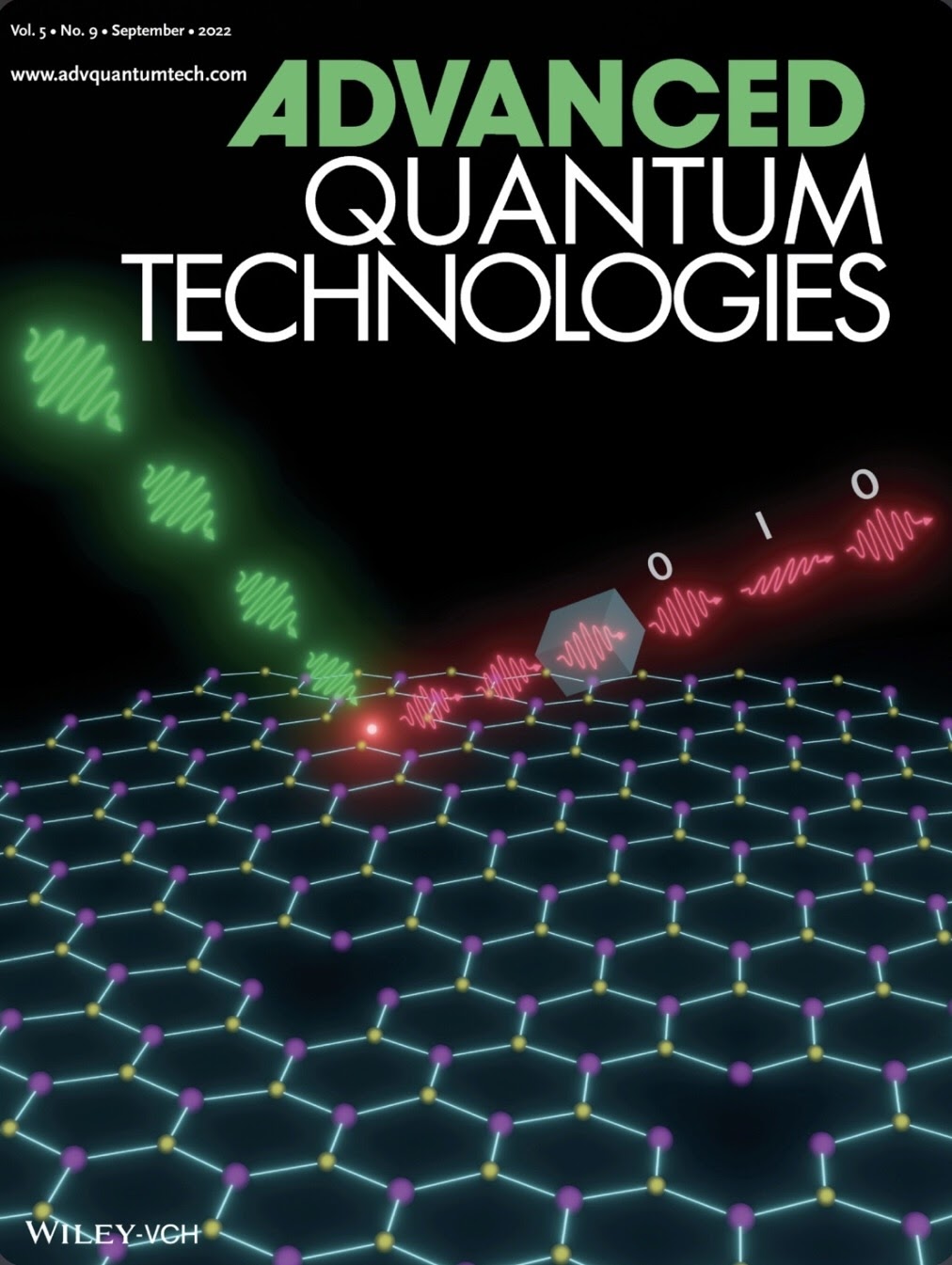
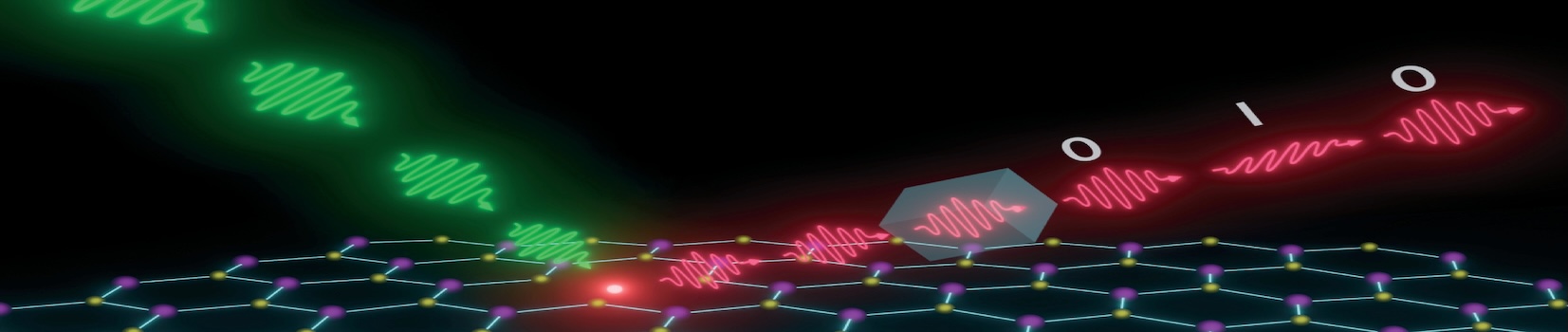
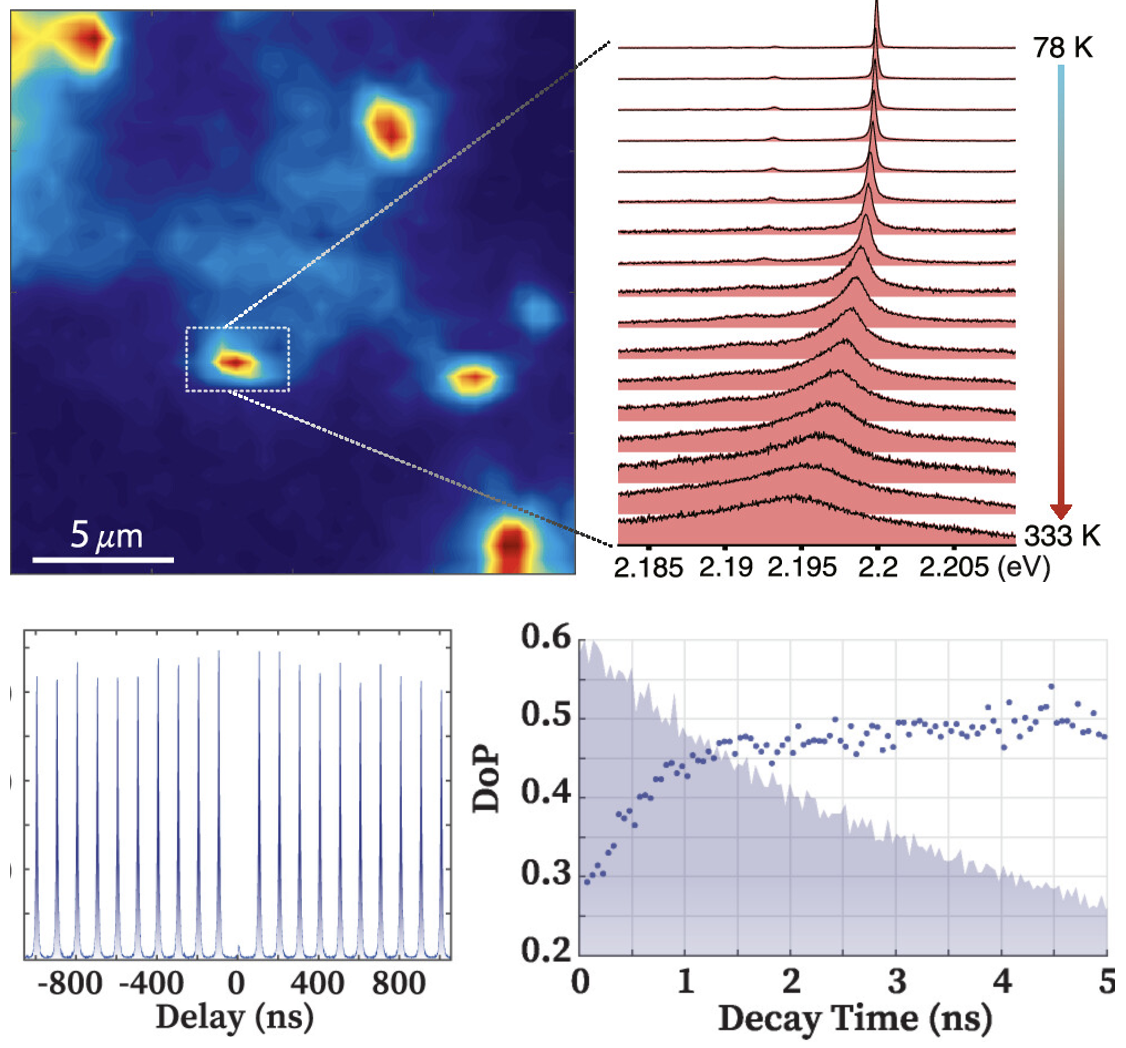
Our foundational research is dedicated to Engineering Novel Solid-State Quantum Emitters, which are the building blocks of future quantum technology. We primarily focus on defects in hexagonal Boron Nitride, as a stable, next-generation platform for quantum light. We utilize advanced optical spectroscopy, including cryogenic measurements, to fundamentally investigate the polarization dynamics, coherence and spin properties of these sources. In addition, we leverage our expertise in advanced quantum materials, including perovskite nanocrystals, Moire-patterned 2D materials, and Transition Metal Dichalcogenide heterostructures, to explore fundamental exciton dynamics and magneto-optical properties. This work aims to harness the unique quantum characteristics of these solid-state defects and materials for high-performance applications in communication and sensing.
Samaner et al., ACS Photonics (2025)
Vidal Martines et al., ACS Photonics (2025)
Nanophotonics for Enhanced Light - Matter Interactions
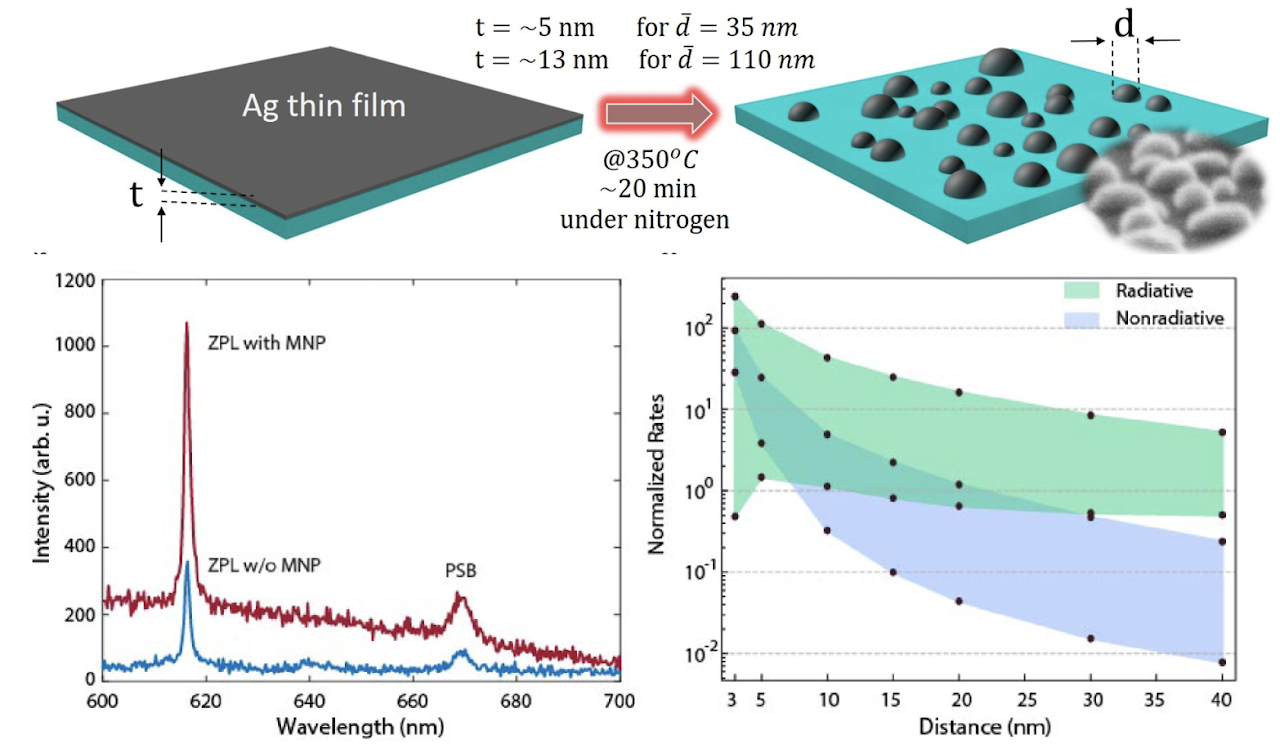
We design and realize Integrated Nanophotonic structures to achieve maximum efficiency and control over our quantum emitters. We are interested in enhancing the fundamental light-matter interaction by coupling solid-state emitters to structures like photonic microcavities and plasmonic structures. For instance, we investigate hBN-plasmonic coupling to enhance and actively control the quantum light emission from defects, providing a platform for highly efficient, on-chip quantum sources.
Integrated Quantum Photonics
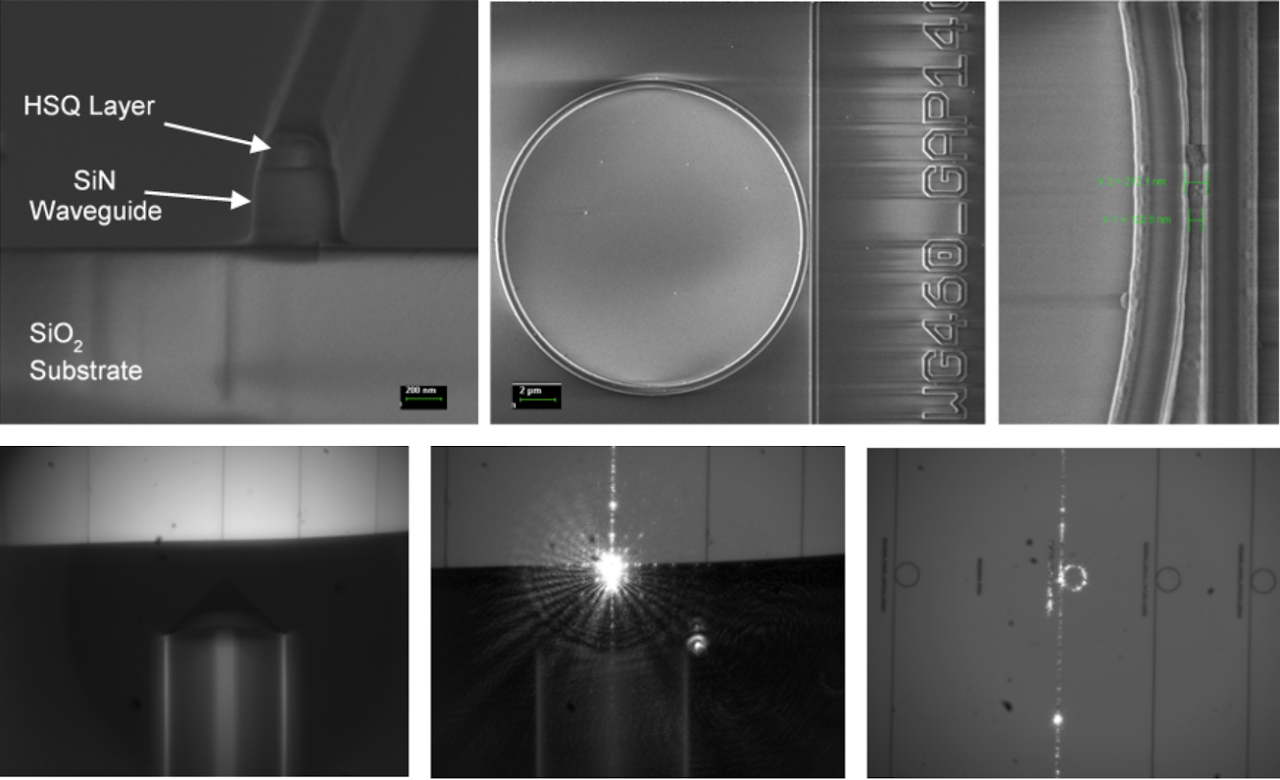
As the system-level component of our work, Integrated Quantum Photonics focuses on designing functional quantum devices using nonlinear optical processes. We utilize nanophotonics structures to engineer devices for efficient photon-pair generation (a source of entanglement) and Quantum Frequency Conversion (QFC) interfaces. QFC is vital for creating chip-scale devices that can shift quantum signals to the telecommunications band, enabling their use for long-distance, fiber-optic quantum networking.
Quantum Communication: From Single Photons to Secure Key Distribution
We focus on translating fundamental research into practical security applications through Quantum Communication and Secure Key Distribution (QKD). Our goal is to develop robust QKD systems by leveraging the high-purity single photons from our 2D material emitters. We integrate these sources with our nanophotonic and integrated photonic structures to build efficient, high-performance QKD prototypes, including the realization of Free-Space QKD systems. This effort is significantly supported by the Quantera 2023 project, COMPHORT, and the translational work being undertaken by QLocked Quantum Technologies.
Tapşın et al., arXiv:2501.13902 (2025)